
ZBA waves ahead permit to allow affordable housing at Cardinal Cottage
Waltham has acquired a comprehensive permit to operate Cardinal Cottage, a historic building on the site of the former Fernald State School, as two units of affordable housing.
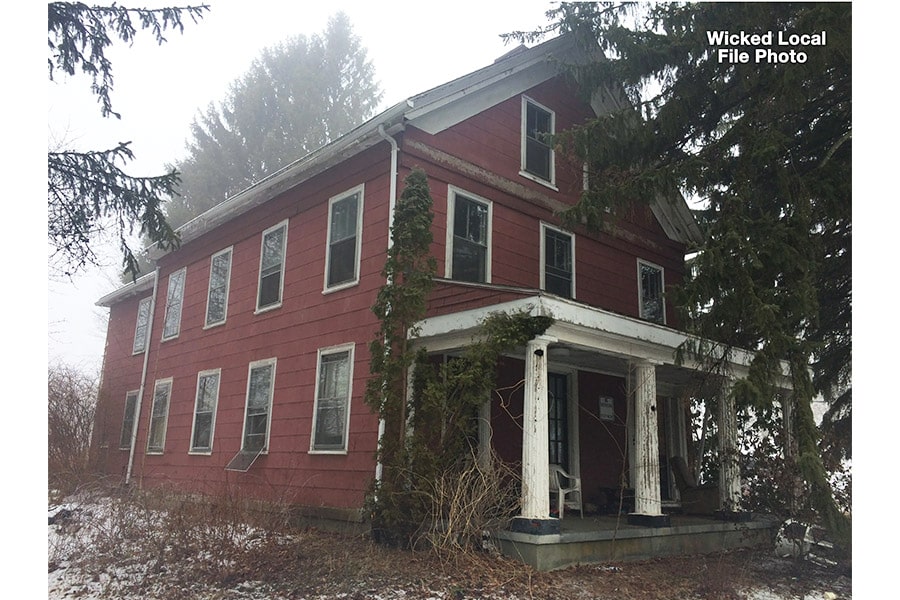
Since the cottage sits inside a conservation and recreation zone and not a residential area, the city had to apply for a comprehensive special permit under Massachusetts General Law Chapter 40B with the Zoning Board of Appeals at the ZBA’s meeting this Tuesday. Using Chapter 40B, developers can bypass certain zoning restrictions provided they create sufficient affordable housing.
Mayor Jeannette A. McCarthy, who attended the ZBA meeting to speak on behalf of the project, said that most of the zoning variances requested by the city were for preexisting features of the existing building that already don’t conform to zoning laws.
Even though the cottage was previously used as a residence, according to McCarthy its nonconforming features and use as a residential dwelling aren’t grandfathered in by Waltham law because it was previously owned and operated by the state, which wasn’t bound by Waltham’s zoning code.
Cardinal Cottage, originally constructed in 1849, actually predates the establishment of the Fernald campus in Waltham. “It’s been historically preserved as a historic asset and is an asset to the neighborhood,” McCarthy said.
McCarthy explained that renovations at the site are now complete. They’ve been in the works for years, funded by money from the Community Preservation Committee, the Community Development Block Grant and the city’s Municipal Affordable Trust Fund.
Inside the comprehensive permit
Generally, Chapter 40B permit processes occur before a developer can begin construction. The ZBA compiles reviews of the proposed project from various city departments and outside experts and examines them holistically, so the project does not have to go in front of various city boards to get different types of permits.
Because Cardinal Cottage is already constructed and renovated, the permitting process was irregular. The document package submitted by the mayor said the building’s design was already compliant with the requirements of city bodies such as the Engineering Department and Fire Prevention Office. McCarthy added that the development had been approved by the Law Department and both the Waltham and Massachusetts Historical Commissions, and said the operation of two units would not have a significant impact on local traffic.
The permit requested a few zoning variances from the ZBA: it asked that the lot not be subject to subdivision control laws since it sits directly on Trapelo Road, and requested variances in height of the building, number of stories, lot coverage and the amount of set back from lot lines.
McCarthy proposed that both units would be priced for households making at most 80% of the area median income, adding that the city would select tenants using a preference for veterans and Waltham residents.
Associate ZBA member Sarah Hankins asked if the city would be willing to set lower rents for one or both of the units, pointing out that in other Chapter 40B permit applications, the board has required developers price some units for households making 60% AMI. McCarthy clarified that the 80% AMI mark was “the highest [rents] would go,” but the city intended to open up bids to contractors for the management of the cottage, and would set the units’ rents lower if possible.
McCarthy told The Waltham Times that MAHTF projects like Cardinal Cottage were a city effort to create housing more affordable than state requirements, which she characterized as unaffordable for most Waltham residents. “We’re trying to counter the rents that are out there with truly affordable [housing],” she said.
Procedural confusion
Hankins also asked about the project’s apparent lack of evaluation from one of the state’s subsidizing agencies of whether the project meets regulatory requirements, including whether it is capable of obtaining funding. The standard comprehensive permit process laid out in Massachusetts’ code of regulations requires developers to obtain a letter confirming a project’s eligibility before applying for a permit with the ZBA.
McCarthy said that because Cardinal Cottage was already standing, and the city wasn’t looking for any more funding for construction or renovation, the procedure laid out for larger Chapter 40B projects were inapplicable to Cardinal Cottage and it didn’t need a project eligibility letter. She said the city was following the same procedures it did to obtain a permit for its affordable residences at the former Hardy Elementary School.
Noah Bombard, communications director of the Executive Office of Housing and Liveable Communities, said that to his knowledge, a project developer could not obtain a comprehensive permit before a subsidizing agency has evaluated the project’s eligibility. He said the EOHLC had not received an application for a project eligibility letter from Waltham.
McCarthy later told The Waltham Times that the city’s Housing Department had called a contact at the state’s affordable housing-focused Local Initiative Program to confirm its process, who said they “[didn’t] see a problem” with the city’s procedure. The city plans to apply for a letter of eligibility to participate in LIP affordable housing initiatives, although McCarthy said it required a certificate of occupancy to do so.
Board members voted unanimously to approve a permit for the project at its first hearing.
Additionally, the ZBA:
- Granted exceptions to minimum setback and street frontage requirements for a new three-story two-family home on a Maple Street lot. The lot, which currently contains a single-family home constructed in 1910, is entirely set back from the street and only accessible through an easement agreement with a neighbor.
One neighbor wrote in objecting to the new development, arguing that the lot would crowd and impede natural light to their property. The project lawyer, Bret Francis, argued that the building was similar to other buildings already existing in the neighborhood, and the board voted 4–1 to allow the project, with Hankins voting against it. - Revisited a 2022 decision that allowed petitioner Nash Quadir to renovate a standing commercial building into five housing units. The board granted Quadir’s request to update previous site plans and expand decks on the building’s second floor.
- Went into executive session to discuss its recent decision to reject an application through Massachusetts General Law 40B to build an apartment building at 455 Totten Pond Road, and then voted 3–2 to grant a modified version of the decision.
Author

Comments (1)
Leave a comment
When commenting, please keep in mind we are a small non-profit focused on serving our community. Our commenting policy is simple:
- Common sense civility: we’re all neighbors, but we can disagree.
- Full name required: no anonymous comments.
- Assume the best of your neighbors.



The city spent 1.5 million on the outside of the house and another 1.5 for the inside. Cost four thousand to heat a month do to the state all electric law. The city is subsidizing housing and spending a lot of money. Why don’t we put that towards our failing school system instead of pet projects. Just like the house on Warren st. City is wasting more and more money. Look at who’s doing all these projects. Same company making a fortune off the city. Who’s getting kick backs from who with our money. Time to audit the city spending