
Charles River Museum exhibit shows Nikola Tesla as fraught businessman
On what would have been Nikola Tesla’s 170th birthday, the Charles River Museum of Industry & Innovation opened a new exhibition built around a collection of documents never before seen by the public.
Handwritten letters between Tesla and executives at the prolific Waltham Watch Co. tell the tale of royalty negotiations for his pioneering new speedometer design, offering a glimpse into the enigmatic inventor’s humanity.
“Nikola Tesla: The Speed of Innovation” takes a narrower approach than most Tesla retrospectives, focusing tightly on one business dispute: a years-long correspondence between Tesla and Waltham Watch, concentrated around the late 1920s. Originally, the company had acquired a patent for Tesla’s innovative and cost-effective air friction speedometer.
The instrument used interlocking cups and air pressure, rather than the magnets and cables typically used by speedometers of that time, to measure a car’s speed. But as Henry Ford’s factory model forced car manufacturing to expand rapidly, Waltham’s car prices had to come down – though Tesla insisted that his speedometer royalty stay fixed.
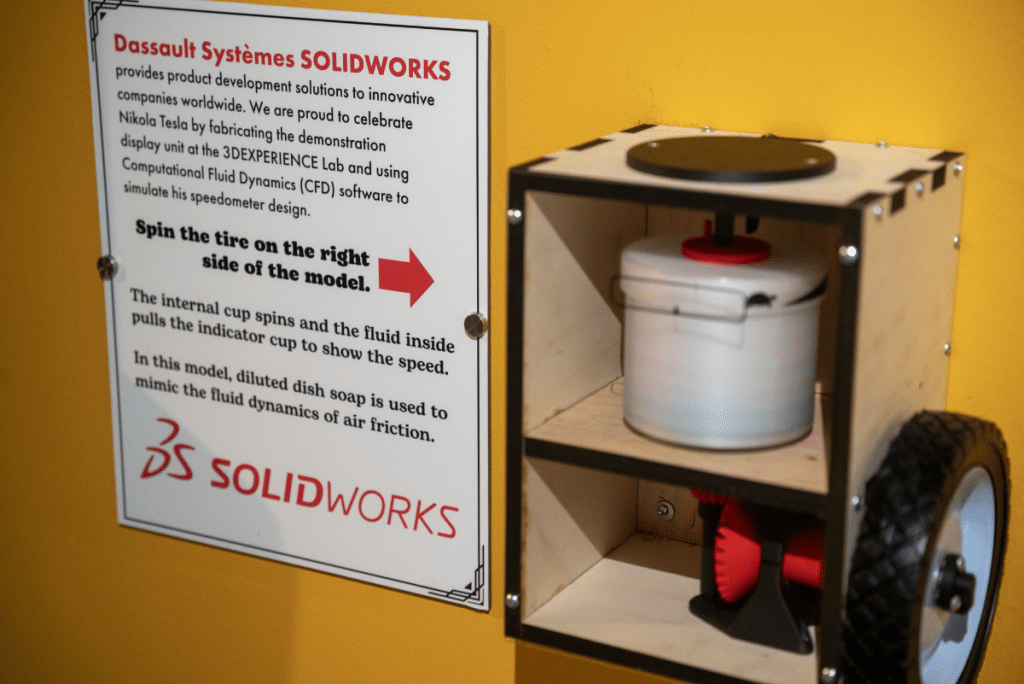
Steve Guerriero, director of education for the museum, said the letters have been in its archive since the 1980s when Pasquale “Pat” Caruso, a master watchmaker at the former Waltham Watch factory, saved them during renovations.
Guerriero said the team spent over two years preparing the materials for display. Mechanical engineer Palig Mouradian, a Waltham resident who volunteered her time and Tesla expertise, and director of operations Joe Niedbala led the team. Museum interns accelerated the exhibit’s process as their target of Tesla’s 170th birthday approached.
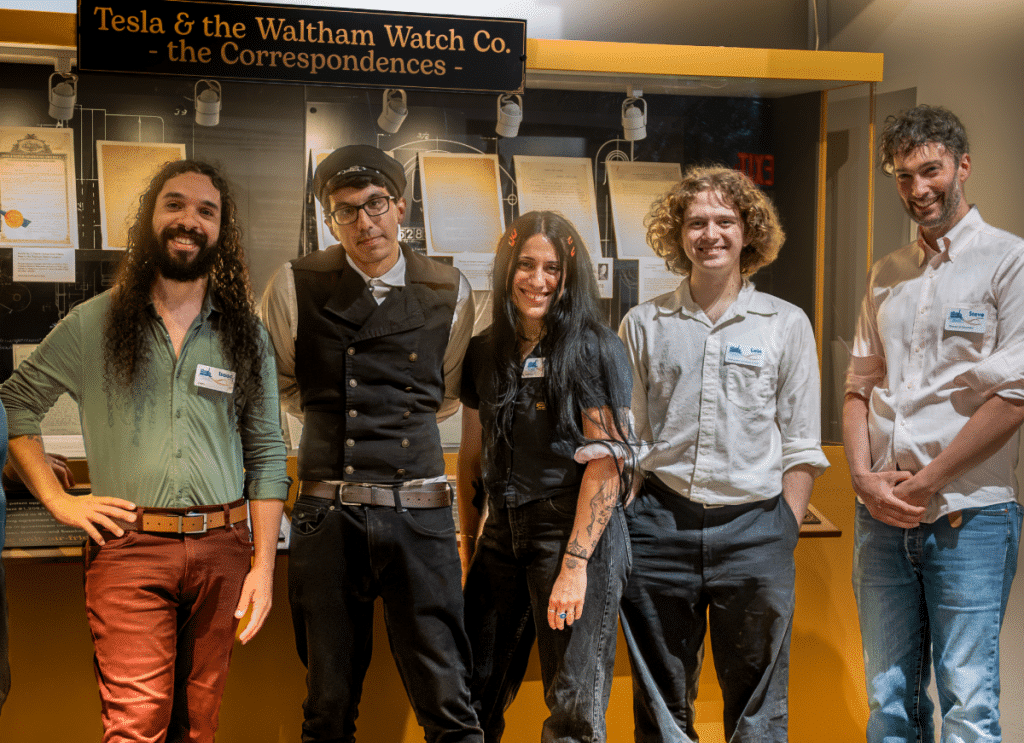
“We know the name that comes up when you think about Tesla … but this was a real person,” Guerriero said. The exhibit pays respects to Tesla’s technical brilliance but doesn’t shy away from his shortcomings.
“He’s brilliant, but he’s a terrible businessman,” Guerriero said. “There’s a myth around people who are super brilliant in one thing, that they are super brilliant in all things. And that’s not always the case.”
The letters capture Tesla arguing to protect his 20-cent per-unit royalty rate as a growing market squeezed Waltham Watch’s profit margins on the speedometer. At a certain point, the speedometer’s price fell below $2, and it was no longer profitable to give Tesla such a sizable cut. The inventor refused to budge, haunted by ghosts of his past financial blunders.
“He cut his royalties once before with Westinghouse Electric, and it cost him millions,” Gurriero said. In the 1880s Tesla had struck a deal with the company over his career-defining alternating current technology, which competed with Thomas Edison’s direct current system. Tesla gave up a deal that would have had Westinghouse pay him a bonus for every single kilowatt used with his AC tech. That decision cost him millions, and his regret over it reverberated throughout the rest of his life.
“This [dispute with Waltham Watch] is 40 years later … and he’s still haunted by it,” Gurriero said. “And so you can easily see why he would not want to cut his royalties, because it changed the entire course of his life and work.”
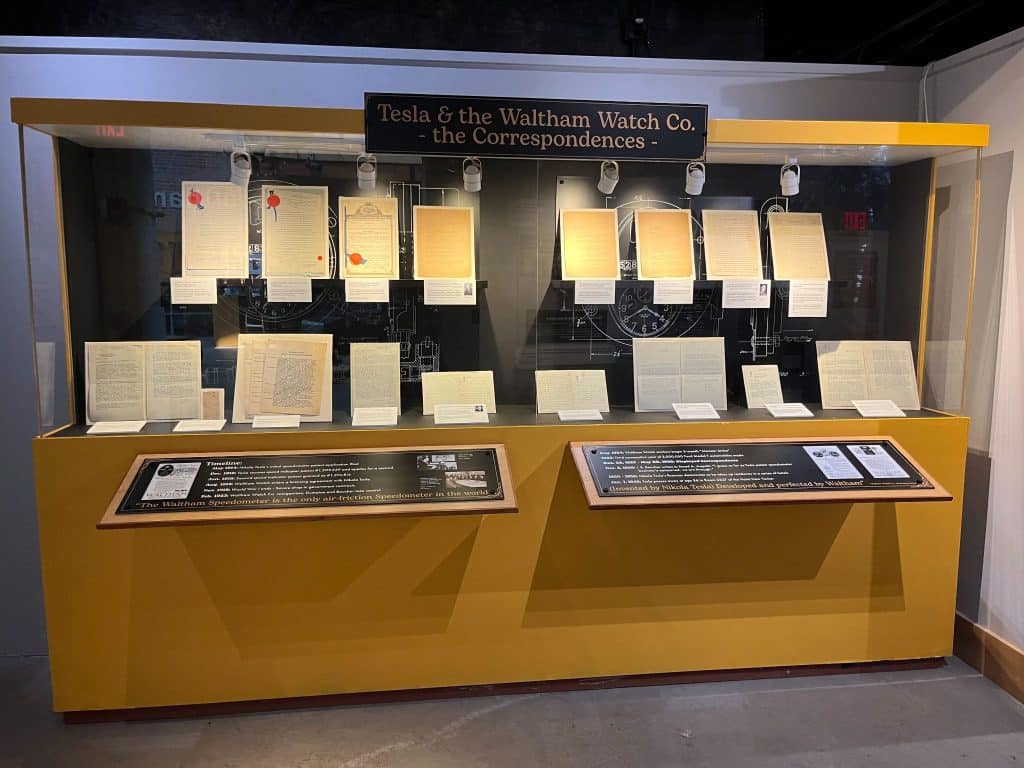
The exhibit notes in a timeline display that Tesla died broke and alone in 1943 in a New York hotel room, having skipped out on several bills at other hotels. His chronic money troubles also offer context for his abrasive business practices. In one letter he enclosed a multipage document of flattering quotes about himself from famous people and publications, arguing that his name alone “added prestige” to Waltham Watch’s products and should therefore justify a higher price, not a lower royalty.
The dispute also offers a window into Waltham Watch itself, which spent the 1920s fending off bankruptcy during an era of financial turbulence. As executives corresponded with Tesla, the company leaned on government contracts, even constructing fuses for bombs.
Tesla’s speedometer was ultimately a side venture that didn’t pan out for either party. His patent for it expired in 1933, and Waltham Watch declined to renew, breaking off its relationship with the eccentric genius.
Gurriero said the exhibit’s broader themes of creativity, ownership and profit echo in 2026, as intellectual property disputes still happen in the tech world.
Alongside the physical exhibit, the museum has spent the spring transcribing the letters for a planned virtual exhibit, intended to give scholars access to the material for research. “Someone could write an entire doctoral dissertation on this,” Gurriero said of the documents.
“Nikola Tesla: The Speed of Innovation” is on display at the Charles River Museum through mid 2027.
Author

Comments (1)
Comments are closed.



I found the Museum of Industry an interesting place to go for years and use to visit the internet setup nearby during the infancy of that technology when users could use computers online there free for that purpose. The story about Tesla highlights the frailty of genius. In an important way it shows how business hangs by a thread. A similar museum exists in Lynn where the shoe factory at one time flourished. Massachusetts used to be a leader in manufacturing worldwide.