
City Council overrides mayor’s veto of Bay Colony mixed-use zoning
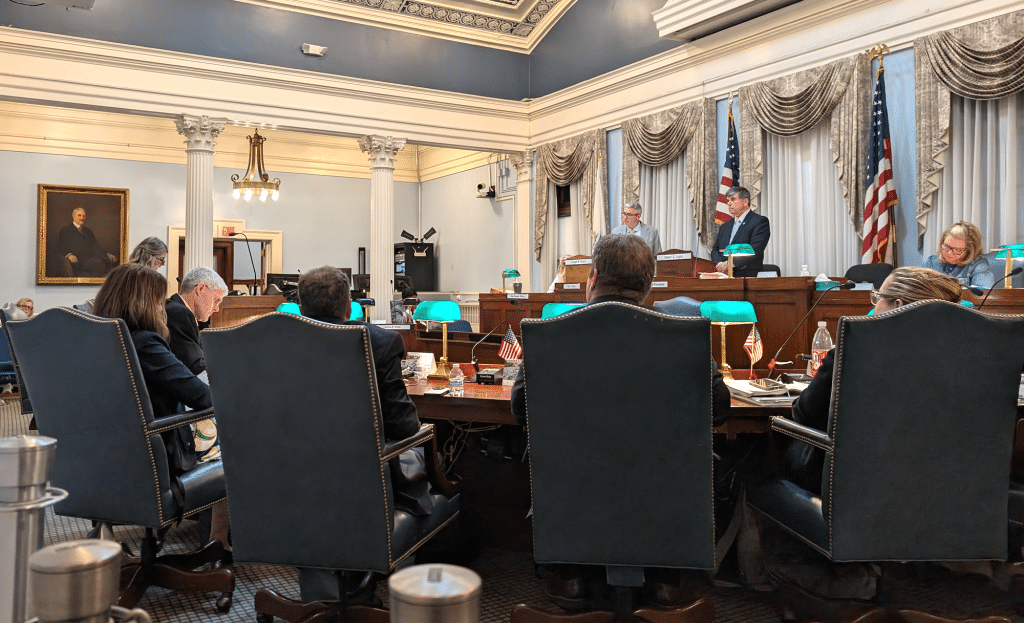
A crowd of residents erupted in applause late Monday night after the Waltham City Council voted to override a veto from Mayor Jeannette A. McCarthy, preserving its June decision to allow more mixed-use development at a partially vacant office lot known as the Bay Colony.
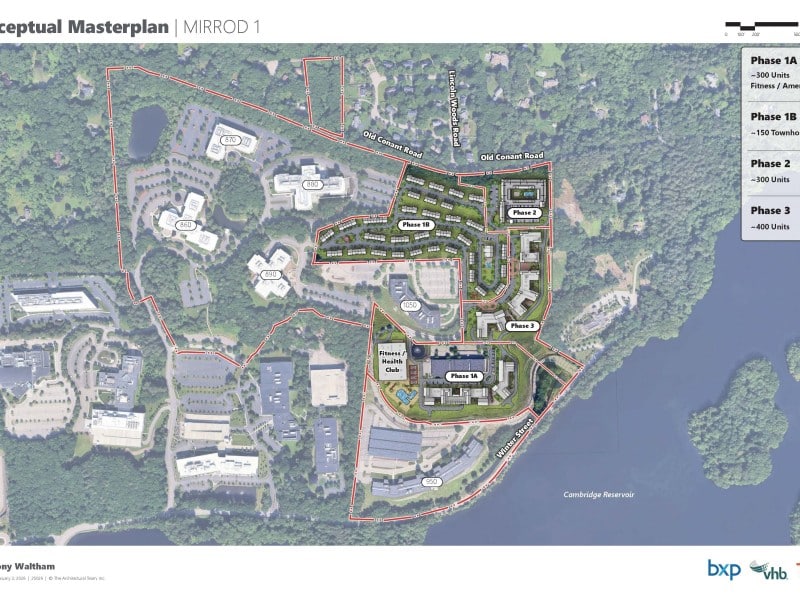
The rezoning is part of a broader effort to create three overlay districts: Residential Commercial Industrial Limited Overlay District 1, located west of Winter Street at Bay Colony, which it divided further into three subdistricts; RCI 2, on Jones Road off Main Street; and RCI 3, the former Polaroid campus at 1265 Main Street.
The road to a veto
On July 1 McCarthy vetoed the portion of the zoning amendments covering the Bay Colony. In her statement of objections, McCarthy questioned why the Bay Colony should receive the same zoning benefits as the more transit-accessible RCI 2 and RCI 3.
The veto came after months of work on the proposals by both city leaders and the developers that own the land.
The City Council hired CommunityScale LLC to review Waltham’s zoning ordinances. In April the city solicitor asked the consultant to conduct a peer review of the proposed RCI overlay districts.
The real estate companies that own the three lots, BXP Inc. and 1265 Main Street LLC, have agreed to build no more than 2000 housing units across the three properties, and requested lower parking minimums because of the districts’ shared-use design. Still, the review estimated that the three districts could accommodate 5,990 residential units and more than 14 million square feet of commercial floor area, which would require 36,296 parking spaces at maximum buildout.
McCarthy also raised concerns about car access to the Bay Colony properties and the effect development could have on nearby neighborhoods.
She did not attend Monday’s City Council meeting.
Arguments from the council
The City Council spent close to a year refining the zoning plan through three public hearings, a neighborhood meeting and dozens of Ordinances and Rules Committee meetings. City Council President Robert G. Logan also noted that the council had unanimously voted to approve the zoning plan in June.
“Waltham has been an industrial community for a long time,” Logan said. “If you look, there’s an eagle and a beaver on top of City Hall. The symbols of freedom and industry. We’ve always reinvented ourselves, but we’re at a crossroads right now.”
He pointed to neighboring communities such as Watertown and Burlington, which he said have revitalized growth by allowing more mixed-use development. Waltham’s vacant commercial lots, he argued, limit the city’s commercial tax base and reduce revenue, shifting more of the tax burden onto residential property owners.
City councilors in their deliberations on Monday night addressed some of McCarthy’s concerns about the plan for the Bay Colony, including traffic and zoning density.
Ward 8 Councilor Cathyann Harris emphasized that the City Council would be able to address many of the mayor’s concerns when BXP and 1265 Main Street LLC come back in for special permits to build any new housing.
She also noted economic and community benefits tied to the rezoning project, including nearby traffic improvements funded by the state and BXP. “These are game changers for the city,” Harris said.
City Council Vice President Randy LeBlanc cast the lone vote against overriding the veto, saying he was disappointed that the council had not to date worked more closely with the mayor to address her concerns. He said his vote was not a criticism of the Ordinances and Rules Committee’s work, an opposition to housing or an effort to align himself with the mayor.
Tom Benavides, founder and policymaker of housing advocacy group Waltham Inclusive Neighborhoods, said he is thankful for the work that the City Council contributed over the past eight months to ensure that the RCI zoning districts be approved.
Benavides called the mayor’s veto “reckless.”
“By vetoing after the fact, she was in effect putting all this infrastructure money at risk, including the housing investment in our tax base,” he said.
Benavides said Waltham is in a housing affordability crisis as with the rest of the region and the RCI plan will help mitigate this issue.
“More housing is essential, so that not only our existing residents are not priced out through displacement and price pressures, but also so that new residents who come here to work and be educated, or just retire, live close to family can afford to live here,” Benavides said.
Authors


Comments (3)
Leave a comment
When commenting, please keep in mind we are a small non-profit focused on serving our community. Our commenting policy is simple:
- Common sense civility: we’re all neighbors, but we can disagree.
- Full name required: no anonymous comments.
- Assume the best of your neighbors.


The mayor is right. What are the long term costs for the city? Police, fire, schools, trash. The taxes they are adding up do not cover it. The math doesn’t add up but yet we have councilors saying this is great. One here celebrating traffic improvements. What a joke! Where has the city made improvements that actually work? The problem is we have to many people living in a city that the infrastructure can’t handle. The streets can only handle so many cars. What about new fire stations or new police cars that are going to be needed for almost 6 thousand new homes? How many homes do we need for this so called crisis? It is talking points that have no real numbers. It’s called supply and demand. The city isn’t made to have 8-10 new apartments. The police and fire are still at the size they were in the 60s. Traffic is at an all time high. Stop over developing. We need councilors who actually have the best in mind for the residents and not the developers. Who’s getting kick backs
You are right! People are short sighted by the small amount of money up front and don’t see the long term cost it will cost the city. This crisis is fabricated. Shortness of housing? How many do we need? How is the city going to handle the traffic? Mbta is not reliable so they will need a car. It’s a made up crisis to scare people into jumping on board something that otherwise they wouldn’t want. It’s a democrat thing! Make something up so people will keep saying it until they believe it. What a joke and shame on these city council
This was a major moment for Waltham, and I’m really grateful to the councilors who stepped up and voted to override the veto. The Council showed real foresight here. By approving this overlay, they’re taking on three massive challenges all at once: fixing our bottlenecked West Side roadways with developer-funded infrastructure, doing our part to address the regional housing crisis, and stabilizing our commercial tax base so residents don’t keep getting hit with 5% tax increases every year. Repositioning those half-empty office parks along 128 just makes sense. Thank you to the Council for keeping their eyes on the big picture and looking out for Waltham’s future.