
City Council takes initial vote to approve west Waltham neighborhoods, considers expansion
City councilors at their meeting this Monday took the first step to approve a plan to add three new neighborhoods to the west side of town.
Councilors voted to preliminarily approve residential, commercial and industrial zoning overlay districts that would allow housing on three lots: a large parcel of land near the Cambridge Reservoir known as the Bay Colony; a lot at the end of Jones Road, which branches off Main Street just west of I-95; and the area behind the Market Basket plaza at 1265 Main St.
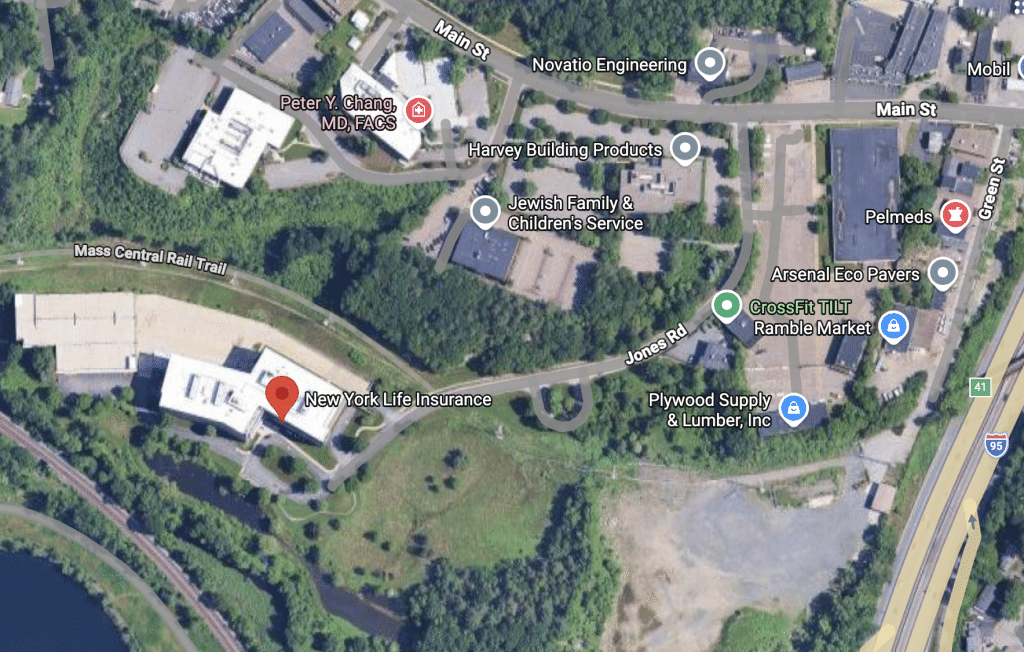
Before the vote, the council held a joint public hearing with the Board of Survey and Planning where the companies at the center of this plan — BXP Inc., formerly known as Boston Properties, and 1265 Main Street LLC — told councilors and residents about changes they’ve made to the districts with the council’s Ordinances and Rules Committee.
BXP and 1265 Main Street proposed the project in December. Since then, the companies have presented a mockup of what they might build on the land, agreed to limit construction to a maximum of 2,000 homes between the three lots, and most recently, worked with the committee on final language for changes to the city’s zoning code.
The council will make a final decision on whether to approve the three districts after receiving a recommendation from the Board of Survey and Planning’s special Wednesday meeting. Once the zoning changes are approved, the companies will have to return to the council to get special permits for each stage of construction before they start building.
Bay Colony still stirs neighborhood unrest
Throughout the zoning process, the Bay Colony proposal has proven controversial among neighbors in the nearby Lincoln Woods neighborhood.
Two residents came to speak against the development at Monday’s public hearing, reiterating worries about BXP potentially infringing on a wooded buffer zone between the development and neighbors’ property, fears about damage to homes and disruptions during construction and concerns about the permissiveness of the RCI overlay districts’ zoning requirements.
BXP Vice-President of Development Kier Evans assured audience members that the company will build on the footprint of the existing parking lot and will not disrupt the existing buffer between its buildings and Lincoln Woods. It plans to build shorter, lower-density townhomes on that border of the property — although Evans cautioned that BXP hasn’t finalized any part of its layout for the site.
Evans added that details about construction would be part of the special permit process. He explained that the RCI districts’ rules on subjects such as density were more permissive to account for the fact that BXP plans to subdivide part of its property into smaller, more closely packed lots, and that the company will face further scrutiny during special permitting.
Highway traffic improvements
The board also heard more details about nearby traffic improvements tied to the rezoning plan. BXP is partnering with the state to fund a new connector road between Main and Weston streets to help reduce traffic in the area and connect the two parts of the rail trail. The project, which will begin in July, is estimated to cost $30 million; the state has committed $15 million to the project and BXP has agreed to pay any additional costs.
Evans said BXP also plans to pay for smaller traffic improvements in the area, including restriping and signalization around the I-95 Weston Street exit, and 1265 Main Street plans to extend the current Tower Road toward the new buildings at the back of its lot. The state has also committed to rebuild the Main Street bridge over I-95 starting in 2030.
Lincoln Woods resident Gerard Dufromont said this was a good start, but added that the area’s roads still aren’t capable of handling an influx of residents. “If you want to take commercial property and make it residential, that’s fine. But let’s build the structure around it [that’s] needed for those people to move.”
A new addition at Jones Road
The council also heard a first presentation from the owners of a lot at 1432 Main St. who want to add the lot to the Jones Road RCI.
1432 Main St., owned by Ferris Development Group LLC, houses a fully leased life sciences and lab building at street level that dips off into land directly adjacent to the Jones Road parcel.
CEO David Ferris said the company had previously applied for a special permit to build another lab in that space but the downturn of interest in Waltham lab space has made it hesitant.
He said the parcel will be surrounded by residential development as a result of this new zoning district, as well as developers building in the area through Massachusetts General Law Chapter 40B, and he doesn’t think he’ll get interest for a lab.
The company proposes a 150-unit apartment building with no additional retail. It proposed a $750,000 contribution as a proportional match for BXP’s traffic infrastructure.
Ferris also suggested that the city ask his company, BXP and 1265 Main Street to evaluate their properties for tax purposes at an additional $50,000 per unit for three years after any special permit is granted, paying additional taxes while they build and lease the housing units.
Resident Tom Benavides spoke in favor of the project as a source for transit-oriented housing; it sits at the intersection of the rail trail and the Fitchburg line where BXP has proposed building a multimodal MBTA station.
Author

Comments (5)
Leave a comment
When commenting, please keep in mind we are a small non-profit focused on serving our community. Our commenting policy is simple:
- Common sense civility: we’re all neighbors, but we can disagree.
- Full name required: no anonymous comments.
- Assume the best of your neighbors.




I agree with almost all the comments. I live near where the water main broke last Friday. By the Commuter railroad station, there is a sewer with the date 1884. Do you think that maybe our present systems are way out of date. There’s no way that Waltham could support (as noted in each of the comments) 2,000 new homes. I think that they are quoting that number to negotiate downward so Waltham residents will accept a somewhat lower number. Developers are well schooled in how to bring a municipality to heel–to obey their wishes. As a town meeting member in a nearby town, I saw the town adminstrators kneel to the developers although all the resident committees (unelected experts who always showed up to express their opinions) were ignored or often their factual presentation denigrated. One last thing, MBTA transportation systems have been failing since the BIG DIG. The trains’ schedules are slower and much less in tune with the needs of riders–there are two-hour breaks between trains between rush hours (also the trains are not handicapped accessible). When 1,000 potential riders want to use the train, they will need to put in a reservation a week in advance.
I fully understand and share the concerns raised by Bob and Rosemary—scaling up our public safety, sewer capacity, and grid infrastructure is critical as our city grows. However, Waltham is a dynamic and developing hub in the growing MetroWest region—we can’t simply freeze our community in time. Our city can absorb and benefit from smart growth, but only if we stop relying on piecemeal approvals. The solution to these valid infrastructure fears isn’t to stop moving forward, but to finally develop and implement a comprehensive Master Plan that mandates public safety expansions and utility upgrades before development begins. But this can’t happen behind closed doors; it requires a real public education campaign and open presentations so citizens can help shape the plan and give it true community buy-in.
Omg how much more can we cram into Waltham????
Zero talk about increasing the size of the police or fire department. 2,000 town homes needs a lot more police and fire. The city needs a fire station in that area. That is a long time to respond to calls up there. The city needs to do their homework and figure out what this will cost the city in the long run. New fire station definitely will be needed. More firefighters. Sub station for police possibly and more cops. These services are overlooked and they will be stretched thinner and thinner if we don’t keep up with the growing of the city.
Enhancements or expansions of ~ water/sewer, electricity ( the structure in Waltham can’t withstand rodents) school and public transportation also need to be done.
There is no way you can add that many residents without compromising all of those services at some point. You have to look at it now; not when it becomes unbearable.