Does buying local reduce the risk of Cyclospora? Experts weigh in
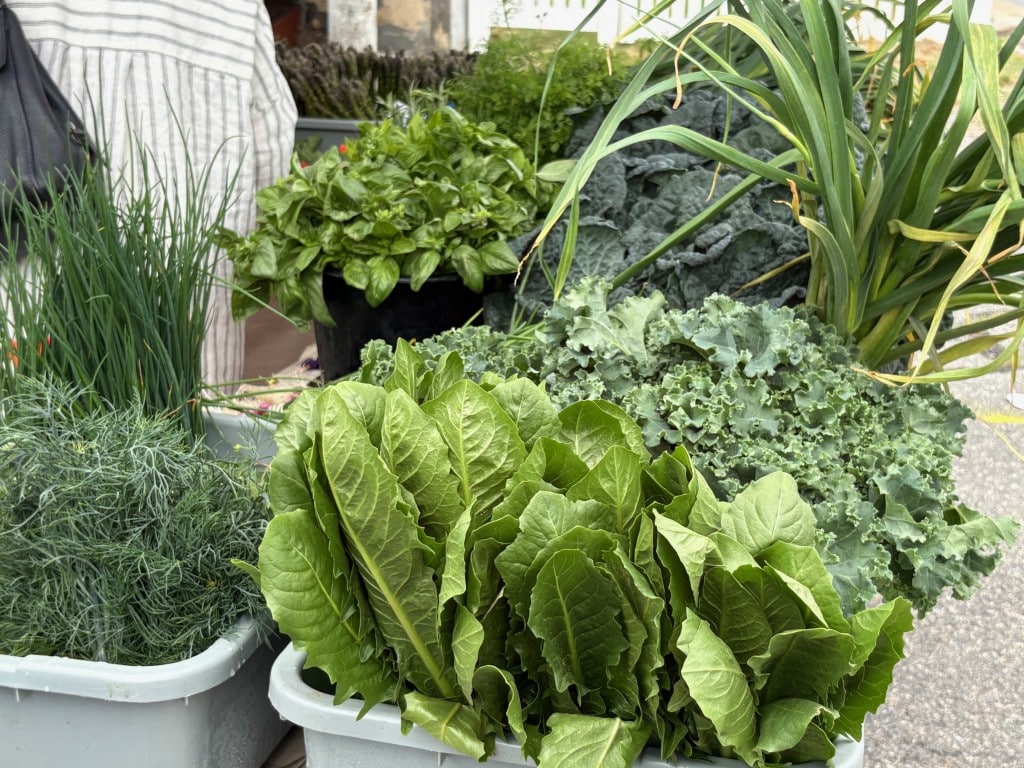
As Cyclospora cases rise nationally, some Waltham residents have become increasingly cautious about where their fruits and vegetables come from and whether local produce offers greater protection from contamination.
Massachusetts has been less affected than other states, with 18 officially reported cases as of July 7. Still, the outbreak has raised questions about where the parasite comes from, which produce is more likely to be contaminated and whether buying locally makes a difference.
Interviews with public-health experts and professors suggest that local produce may offer some advantages, but geography does not guarantee safety. Water quality, sanitation and handling practices matter more.
Cyclospora and the scope of the outbreak
Cyclospora is a parasite that infects the human small intestine and spreads when human waste contaminates food or water, according to Nicole Hill, a senior lecturer in natural and applied sciences at Bentley University.
Cyclospora commonly causes watery diarrhea, and laboratory testing is typically needed to confirm the infection, according to Tony Kiszewski, an associate professor of natural and applied sciences at Bentley University. He added that untreated diarrhea lasts about seven days on average, though the duration can vary.
Hill said contaminated irrigation water, fertilizer or water used to mix agricultural chemicals can all create risks.
Contamination may begin on a farm through irrigation water, but it can also spread during processing when produce is washed in shared water.
“Often in processing plants, what they do is they bring in all the lettuce and everything, and they put it in a big bin, and they wash it, and so it’s probably there where a lot of the contamination happens,” Kiszewski said.
Egg-like structures called Cyclospora oocysts can cling to folds or cut surfaces of produce. Unlike some bacteria, they are resistant to common chlorine-based sanitation systems, according to the experts interviewed.
Hill said the United States has recorded about 3,000 Cyclospora cases per year over the last decade. Reported cases this year appear to be at least three times higher, although greater public awareness and increased testing may also contribute to the rise in numbers. She added that no deaths have been reported.
Giovanni Widmer, a professor of infectious disease and global health at Tufts University’s Cummings School of Veterinary Medicine, said people taking immunosuppressive medication and others at a greater risk of severe illness may want to pay particular attention to the origin of raw produce that cannot be peeled.
“Unless one is at particular risk, there is no reason to forgo your favorite salad dish,” Widmer said.
Does buying local reduce the risk?
The current Cyclospora outbreak has been linked to iceberg lettuce supplied by Taylor Farms, possibly involving lettuce imported from Mexico, according to Hill. Cyclospora is not commonly found in the U.S. environment.
“Cyclospora is not common in the US environment and is more often found in tropical and subtropical areas; many cases of Cyclospora in the US are associated with international travel and exposure abroad,” Kayleigh Watson, an epidemiologist and shared services coordinator with the Great Meadows Public Health Collaborative, said.
According to Kiszewski, there are also many safety regulations at U.S. farms, making local produce less likely to be contaminated.
“If you buy local, we have such strict regulations on septic tanks and exposure to sewage that it’s unlikely that it would happen from locally grown produce. You know, so that’s another thing people can do: just buy local,” Kiszewski said.
Other experts emphasized that local produce is not automatically safer and that water sources, sanitation and handling practices remain more important than geography alone.
Experts also recommend reaching out to local farms directly to find out about their growing, washing and handling practices.
Outbreak concerns influence local shopping choices
Several Waltham residents said they had noticed increased demand for certain products, such as lettuce, at farmers markets.
“The farmer’s market was sold out of lettuce by 11 a.m.! I have never seen that happen before,” Cheryl Strelko Gradziel wrote.
In response to a post in a Waltham residents’ Facebook group, several commenters said they felt more confident buying produce from local farms and markets.
“[I] definitely feel more confident buying at local farms and farmers markets, which I am apt to do this time of the year. Also, I feel confident in buying from local companies like Little Leaf,” Elaine Coolbrith wrote.
Several commenters said they trusted produce from Little Leaf Farms.
“The social media for Little Leaf has been very helpful in explaining how they source their water for their plants, etc.,” Andrea Parent wrote.
Little Leaf Farms, a Massachusetts-based greenhouse lettuce producer, published a statement outlining its water-treatment and food-safety practices.
“We use rainwater that falls on our roof and is directed to lined basins as our primary source of irrigation water. We treat 100% of the water via ultraviolet (UV) sterilization prior to entering our greenhouses, which is a widespread and proven practice for sterilizing water, leaving zero chemical residue,” Little Leaf’s team wrote.
The company said it was not aware of any Cyclospora cases connected to its products, and that if contamination were detected, it would communicate with its customers and take immediate action.
Hannaford’s response
As many residents continue to buy their fruits and vegetables from large supermarkets, Hannaford said food safety, communication and transparency were priorities, as it monitored the outbreak.
The supermarket said it was not aware of any cases affecting its stores and had not removed any products from its shelves.
“Hannaford is committed to delivering fresh, quality food to our customers and ensuring the safety of the products we sell is our highest priority. We’re closely monitoring this situation in partnership with our suppliers and regulatory partners,” Zach Blanchard, external communications manager at Hannaford, told the Waltham Times. “As always, if we become aware of any food safety concern impacting our customers, we will take immediate action to remove impacted products from sale and notify customers as appropriate.”
What consumers can do
When fresh produce gets contaminated, rinsing alone cannot reliably remove the parasite, as it sticks to the fruits and vegetables easily.
Watson recommended rinsing produce under clean running water, even if it is labeled as pre-washed, and discarding outer layers when possible. Additionally, cooked, frozen or dried food is not considered at risk in the same way as fresh, raw produce.
Experts said residents should not avoid fresh produce, but they should be cautious about where their fruits and vegetables were grown and wash them carefully at home.
Author