
How Waltham Prioritizes Sidewalk Repairs
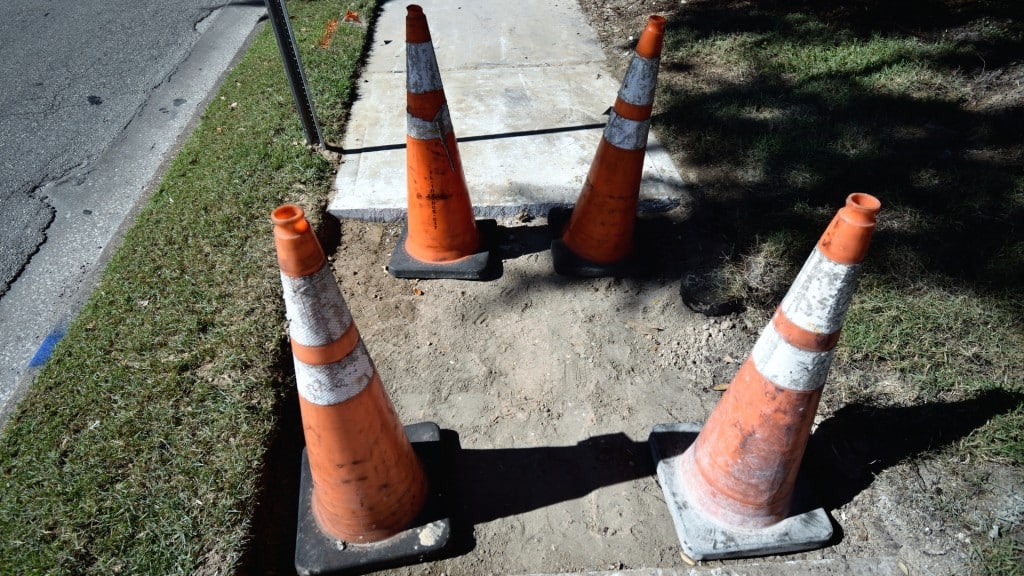
A recent student project addressing sidewalk accessibility in Waltham has drawn attention to the condition of city walkways and raised questions about how residents report damaged sidewalks and how the city prioritizes repairs.
While the student project is an independent effort, many of the findings echoed longstanding infrastructure deficiencies identified by city officials and residents.
“I’ve advocated for sidewalk improvements the students confirmed need fixing,” Ward 6 Councilor Sean T. Durkee wrote in an email to The Waltham Times.
The city encourages residents who notice sidewalk problems or other infrastructure deficiencies to notify the city directly through the online Report a Concern portal. Submitting details through the portal allows the Department of Public Works to track and evaluate issues efficiently.
Repairing Sidewalks
Director of Public Works Michael Chiasson explained that sidewalk repairs are often tied to broader infrastructure updates.
“If we are repaving a street, we try to fix the sidewalks too,” Chiasson said, noting that repaving can take 20 or more years, depending on whether it’s a well-traveled road such as Moody Street. Funding also plays a role in when streets are repaved.
When residents submit concerns regarding damaged walkways, Chiasson said
the response depends heavily on the scope of the problem.
“It depends on what the issue is and how bad the area around it is,” he said, adding that the city prioritizes repairs for areas that “are dangerous, are a tripping hazard or cause access difficulty.” However, he noted that what looks like a simple repair in front of one home can turn into a much larger infrastructure project if the entire block is damaged.
Chiasson said the city is being more proactive in preventing sidewalk buckling.
“We are making better decisions on the types of trees we plant so we don’t have to fix things in the future,” Chiasson said.
Durkee said he understands the policy of tying sidewalk repairs to street repaving, but it can “harm older neighborhoods such as the Highlands and most of Ward 6.”
“It falls on deaf ears to constituents when their street hasn’t been paved in over 30 years,” he wrote in an email. “Before Hammond Street was finally paved in 2023, it had remnants of infrastructure from the 1930s and ‘40s. The south side of Summit Street had a coating of tar as a sidewalk.”
Funding, Advocacy, and Planned Improvements
Durkee explained that while the City Council approves the city budget, the mayor and department heads make the final decision on what infrastructure gets repaired.
He did have good news on some longstanding projects.
“The good news is the Public Works Department received a [$290,000 Complete Streets] grant in May, which can help with pedestrian crossings, traffic calming measures and transit investments,” he said, noting that the funding will support the building of a sidewalk on Beaver Street, near Bentley University and Lyman Street, a project he advocated for since his election in 1999.
The city also expects to receive nearly $1.96 million in state Chapter 90 funding for fiscal year 2027, which will be combined with local funds to repave roads and rebuild sidewalks across Waltham.
Next Steps for Project Sidewalk
The McDevitt civics students (now Waltham High School students) are continuing their advocacy efforts to ensure sidewalks throughout the city are accessible.
McDevitt Middle School teacher Ryan Hanlon said in an email to the Waltham Times that the four students are still enthusiastic about their project and are excited by the response from the city. They received commendations from the City Council in September, and they are presenting their project to the Disability Services Commission at its December meeting.
Hanlon said the students are reworking their high school class schedules to attend the DSC meeting. He said WHS Principal William Conard has been supportive in finding time and space to attend the virtual meeting.
“Overall, things are going well and progressing,” he added.

Author

Comments (1)
Leave a comment
When commenting, please keep in mind we are a small non-profit focused on serving our community. Our commenting policy is simple:
- Common sense civility: we’re all neighbors, but we can disagree.
- Full name required: no anonymous comments.
- Assume the best of your neighbors.





Great article, ClarkSt. between Bright & Hastings are really a hazard.