
Inside ICE’s process for targeting Waltham resident Gedion Masunsu
In his tortuous journey over 19 months of detention by ICE, beginning in January 2025 to his deportation to Uganda in October of this year, Waltham resident Gedion Masunsu has been haunted by a lingering question: How did ICE learn about the 911 call Jan. 6, 2025, alleging a domestic assault that led to his arrest by Waltham police?
Waltham has a stated policy of not cooperating with federal immigration officials in arresting immigrants, unless someone is wanted for a violent crime.
An ICE website report on Masunsu’s detention by ICE in late January 2025 suggests that ICE received data from Waltham law enforcement within hours of the incident involving Masunsu and his then-girlfriend: “The Waltham Police Department arrested Masunsu Jan. 6 for two counts of assault and battery on a pregnant victim and destruction of property. ICE lodged an immigration detainer later that day against Masunsu with the Waltham District Court, which failed to honor the detainer and released Masunsu from custody.” (The assault and battery charges would be dismissed by a Massachusetts judge within two months, but ICE never updated its web site.)
Waltham’s police chief, Kevin O’Connell, denies there is data sharing going on between his police department and ICE. “We don’t share data” with any agencies, he told the Waltham Times in a recent interview.
Could public safety data collected by the Waltham Police be reaching ICE through indirect channels?
A national advocacy group known as de-Ice National Network claimed in a recent webinar that, “Thousands of local law enforcement agencies are sharing their records — 911 caller data, victim information, witness information and more — with LexisNexis, a private data broker that sells access to federal agencies including ICE. This often happens without local officials and citizens realizing it, even in communities with sanctuary policies.”
An investigative organization known as FinePrint, which partners with de-Ice National Network and maintains a database of local law enforcement agencies known to work with ICE, said LexisNexis stitches local police files “into a single privatized intelligence network, wiring billions of commercial records together with public data and live police feeds. … Police records that were supposed to stay local, including sensitive details about crime victims and minors, get pulled into a commercial database that thousands of agencies can search, U.S. Immigration and Customs Enforcement (ICE) among them.”
The FinePrint database identifies the Middlesex County Sheriff as an agency “under investigation,” But Kevin Maccioli, a spokesperson for the Middlesex County Sheriff, said, “The Middlesex Sheriff’s Office does not utilize LexisNexis to upload any 911 or other similar data. … The MSO utilizes LexisNexis primarily as part of our civil process functions. … This is not an immigration-related process.”
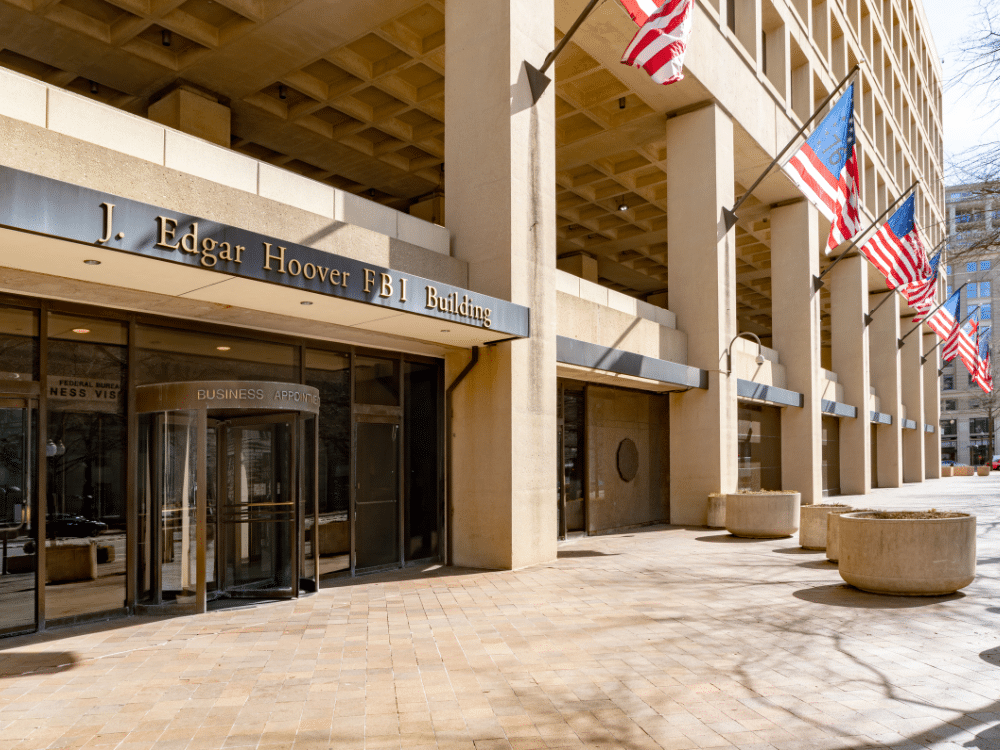
So how did ICE come to learn on Jan. 6, 2025, about Gedion Masunsu’s arrest in a Waltham domestic disturbance that same day? Waltham Police Chief O’Connell thinks he knows the answer: “I don’t know what happened in this case, but I do know that whomever gets arrested here gets fingerprinted.” All fingerprints are routinely sent to the FBI, which enters the data into a national database known as the Next Generation Identification system.

In response to a query from the Waltham Times, an FBI spokesperson said “The NGI System provides law enforcement and criminal justice agencies, such as the U.S. Immigration and Customs Enforcement (ICE), who are authorized, with direct access to NGI to obtain criminal history record information for authorized purposes.”
ICE responded to a query with an email stating that its spokesperson wasn’t available to comment.
Once the fingerprints apparently tipped ICE off to Masunsu’s arrest, ICE tracked him down in a matter of weeks. According to Masunsu, who texted with the Waltham Times from his current residence in Uganda, the accusations had resulted from a misunderstanding with his girlfriend, Sylvia Mamutabi Mugisha, whom he subsequently married. She had accused him of striking her, which Masunsu denies. (She could not be reached for comment.)
After the arrest Jan. 6, 2025, a judge imposed a restraining order against Masunsu, so he resorted to living out of his car. By late January, he said he began “receiving many unknown numbers calling me, which I didn’t pick up.” He finally decided, while on his way to church on Jan. 25, to answer one of the calls. “A lady was on the line, saying, ‘Hey Gedion, I want to book you an appointment for your immigration proceedings. What’s your home address, number, and where are you now?’ I knew there’s something wrong, but since I am innocent and I am in the country legally, I couldn’t care what comes next. So around 2 p.m., these guys just surrounded my car when I had just gotten seated inside, praying, and getting ready to leave, and I was arrested, and I am thinking Waltham police alerted them … In fact, I was one of the first people to be arrested when Trump had just become president.”
That arrest would lead to 19 months of detention at a New Hampshire county jail, and finally, deportation to Uganda on Oct. 1.






Comments (0)
There are no comments on this article.