
Replacing an empty parking lot with new homes is good for everyone
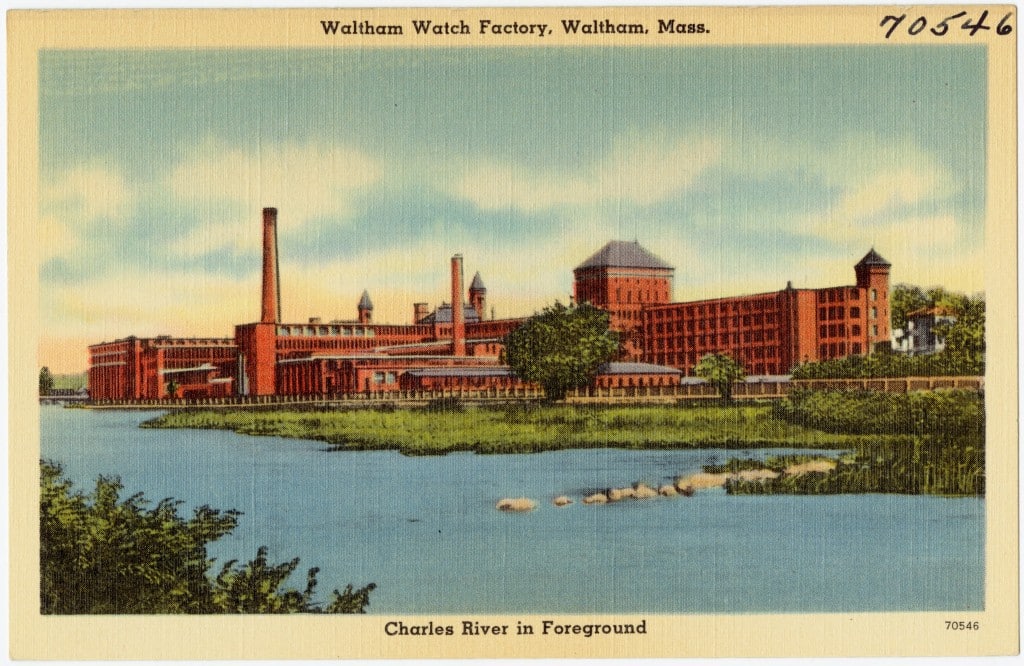
The Watch Factory is one of Waltham’s historic treasures, important enough to inspire both our “Watch City” nickname and also one half of our city seal. While the factory itself hasn’t manufactured watches since the 1950s, it is well preserved and exists today as a vibrant mixed-use development of office space, a restaurant and 163 mixed-income homes. As anyone who has ever traveled down Crescent Street knows, the old factory is also surrounded by a lot of parking.
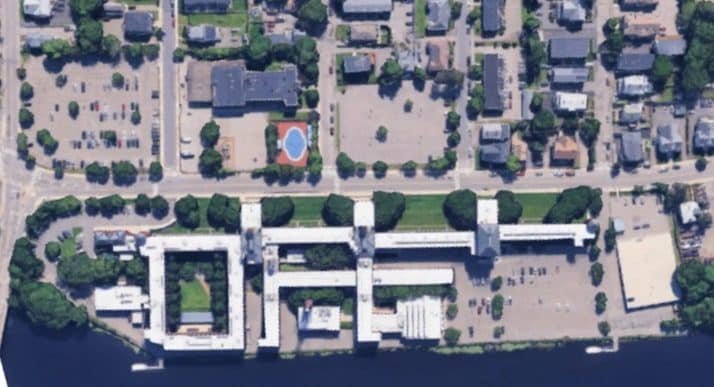
In fact, the Watch Factory has more than 750 parking spots, comprising spaces around the factory, in the parking garage at the end of the property, and the two surface lots across the street. This is an astounding amount of pavement, made more so by the fact that all the workers, customers and renters combined never use more than 40% of the available spots. That’s right: The Watch Factory is so awash in parking that there are more than 450 parking spots that sit empty and unused all the time.
This is wasteful for a number of reasons. Empty pavement generates no tax revenue, provides no drainage for stormwater and worsens the urban heat island effect. It also squanders space that could otherwise go towards homes at a time when Massachusetts is suffering from an acute housing shortage. This shortage has driven up housing costs and caused a large amount of unnecessary pain and displacement for families who just want to call this wonderful city home.
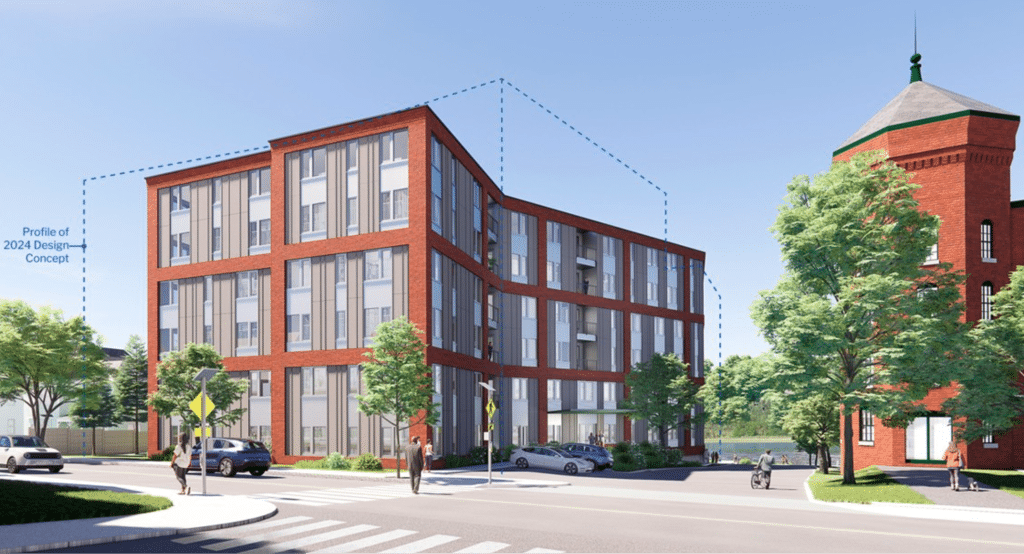
Just about any use would be better than the status quo, so it’s delightful to see that the Watch Factory property owners are planning on replacing one of their empty parking lots with improved riverfront access and 140 new homes. This proposal will make us a more vibrant and affordable city, and it should serve as a model for how Waltham can transform underutilized land into much-needed housing across the city.
This development harms no one
While the proposed expansion of the Watch Factory has drawn a fair amount of neighborhood opposition, it presents none of the dangers that its opponents claim.
This new expansion is more modest than the existing Watch Factory in every way. Even ignoring the Watch Factory’s towering spires and smokestack, the expansion still has a shorter height, less floor area and fewer units than the existing building.
Parking is also not a concern. Once the expansion replaces one of the parking lots, the Watch Factory will still have an extra 250 parking spots that go permanently unused. This new apartment building isn’t close to big enough to dry up the sea of parking that surrounds the Watch Factory.
Traffic impacts will also be negligible. A report approved by the Waltham Traffic Commission only anticipates less than one car per minute during peak hours from the expansion, and traffic will be reduced overall as new residents are able to live close to downtown amenities and transit. We actually saw this effect in action when the original Watch Factory redevelopment opened in the 2010s: Traffic at Crescent and Prospect streets decreased by 18% between 2013 and 2026, despite traffic worsening citywide over that same period.
This development benefits everyone
First and most importantly, the biggest beneficiary of this project will be people who rent. Some 140 households will have new homes to live in, neighbors will be spared the price pressures from those 140 households looking to outbid them for existing housing, and rents will soften citywide. The city will receive a $4.2 million payment from the developer for affordable housing under the current proposal, and ongoing City Council reforms could create the possibility for 21 on-site affordable units rather than this cash payment. Either way, it is a win for housing affordability. This isn’t even to mention the financial benefits to existing Waltham homeowners. New multifamily housing consistently provides more tax revenue than it costs, reducing the burden on existing taxpayers. From a strict tax perspective, the Watch Factory expansion is a winner for the city.
Beyond affordability, this project simply makes the neighborhood a nicer place to live. Not only will we have new neighbors to replace an empty parking lot, the project will also provide an enhanced pedestrian-only path from Crescent Street down to the river path. Neighbors no longer need to walk through a parking lot to access the river. Proposed traffic calming measures along Crescent Street will also make the roadway safer for everyone: New crosswalks with flashing beacons will make street crossings safer, and narrower lanes with added on-street parking will help to slow down speeding drivers. Local businesses will also benefit from the increased foot traffic with new residents close to downtown.
We all benefit when our city transforms underutilized, empty asphalt into new homes. This positive vision can become reality at the Watch Factory, but only with the support of residents, the Zoning Board of Appeals and City Council.
The Zoning Board of Appeals will vote on whether to advance this Watch Factory expansion on Tuesday, June 2, at 7 p.m. at Government Center (119 School St). Public input can be a huge factor as to whether this project moves forward, so please attend in support if you are able and interested. You can also share your support by emailing the ZBA at pdoucette@city.waltham.ma.us as well as your city councilors at councillors@city.waltham.ma.us.
Author

Comments (6)
Comments are closed.



This project’s pending approval is likely the most important issue of the year. Not because it stands to have the greatest impact, but because it is a litmus test for the City’s priorities: Does the City care more about creating housing opportunities for a community facing the region’s most severe vacancy crisis*? Or, does the City care more about the stuporous nostalgia of a gradually disappearing constituency? If I were a parent or grandparent in Waltham my priority would be making sure my kids or grandkids had somewhere to live when they flew the coop. Blocking desperately needed housing construction is directly counter to that goal.
When I moved to Waltham, I lived in a townhouse built in 1860(!). Obviously it had been renovated, but the challenges of living in a drafty building more than a century old were ridiculous considering the cost I was paying. Since the City has a lack of modern housing options with vacancy, I was forced to move to a different community when I could finally afford a more comfortable home. A City with old, dilapidated, decrepit housing and little else to choose from is not a city I want to raise kids in.
In The Departed, Alec Baldwin’s character pseudonymously refers to Waltham as the “128 High-tech corridor”. That movie was made 20 years ago. If they were writing that script today the writers wouldn’t in a million years look at Waltham and write that line after seeing how stagnant the City has become due to its stark lack of housing growth. Let’s at least try to become the semi-modern City the schmucks who wrote The Departed thought we were over two decades ago.
*Rather, lack of vacancy
As a former Waltham renter and current Waltham homeowner, I understand the neighborhood’s concerns. That said, Waltham is a major hub in the MetroWest region that will inevitably continue to grow. This project appears to be a smart use of an underutilized asphalt lot perfectly suited for the area. Crescent Street is already an active, mixed-use area with retail, restaurants, office space, markets, and a hotel. Adding more housing fits this existing fabric perfectly, while replacing a parking lot with needed housing and a new green space.
It seems as if the developer listened to feedback by scaling down the original plan. While the current proposal trades affordable units for a $4.2 million trust fund payment, I strongly agree with those who are pushing for a compromise to secure actual on-site affordable housing. Still, replacing an underutilized parking lot with a thoughtful design that addresses growth is a compromise worthy of community support.
Typical. You are telling the people who live in the neighborhood that their concerns are wrong and you are telling them what is good for them. You are not valuing the concerns of the people by telling them they are wrong! Let’s start with traffic. Have you gone down crescent street and prospect street at any time lately. Apparently not. The fact you say traffic is down since the watch factory added 160 units is laughable. It’s impossible! When are these traffic studies done? The middle of the night? How does this help affordability? These apartments will be 3-5 thousand a month! Adding all these apartments stresses our emergency services. Do they increase in emergency staff? Taxes have gone up over the years even with all the building. There is zero benefit to the neighbors. Enough with the traffic, it is horrible. Narrowing the streets is a Cambridge thing. It creates more accidents and more damage to the parked cars. Makes drive difficult for truck drivers and emergency vehicles. But according to the writer the neighbors will get a new path and not have to walk thru a parking lot. Maybe listen to the neighbors and hear their concerns before writing a article that seems like the builder wrote it for you. Horrible pitch for the watch factory owners. I hope it gets voted down
Obviously whoever wants this does not live in the area!! The traffic on Crescent and Prospect Streets is terrible at two til six in the afternoon. Also Waltham is so congested now we do not need more housing. With all the new building can someone tell me if the police or fire department has been increased? More people more services needed!! The parking in this area is tough why not allow residents to park there. I remember when they had a security guard making sure no one other than residents or employees parked in the lots, they would have your car towed. I don’t want to hear they are trying to better the area for the residents.
Speak for yourself, Tom. You sound like a shill for real estate development under the guise of “affordable housing.”
Tom writes: “This development harms no one” as though this was a fact. He does not live in the neighborhood and therefore is oblivious to what the downside of 1) tremendous increase in traffic which is already at the breaking point 2) the negative impact of oversized structures that dwarf neighboring homes and destroy the residential feel of Crescent Street. 3) The proposed structure is for mixed use, not 100% “affordable” housing (only 21 temporarily lower priced units out of 140) 4) development would lead to a permanent reduction in open space both on the ground and the view from walking paths along the Charles River 5) This development does not “benefit everyone” — in fact it will only benefit the owners of the building and their tenants — every other person in Waltham will be either be harmed by it, or be unaware of it. No one – besides the developers and people in the construction industry — will benefit from this proposed structure. How does Tom Benavides know that the proposed structure will make the neighborhood “a nicer place to live?” Everyone I have spoken to, who live in the neighborhood are horrified by this overbearing and oversized proposal. We are not recipients of the “4.2 million dollar payment to the City of Waltham” nor are we naive enough to believe that “traffic calming strategies and new crosswalks with flashing beacons” will do anything to ameliorate the overload of traffic.
I strongly support Tom’s ideas. We need more housing and preserving unused parking makes no sense
We really should maximize the value of river view housing. People appreciate natural environments cars do not!