
Towns surrounding the Quabbin Reservoir protect the water for 2.7 million people in Eastern Mass
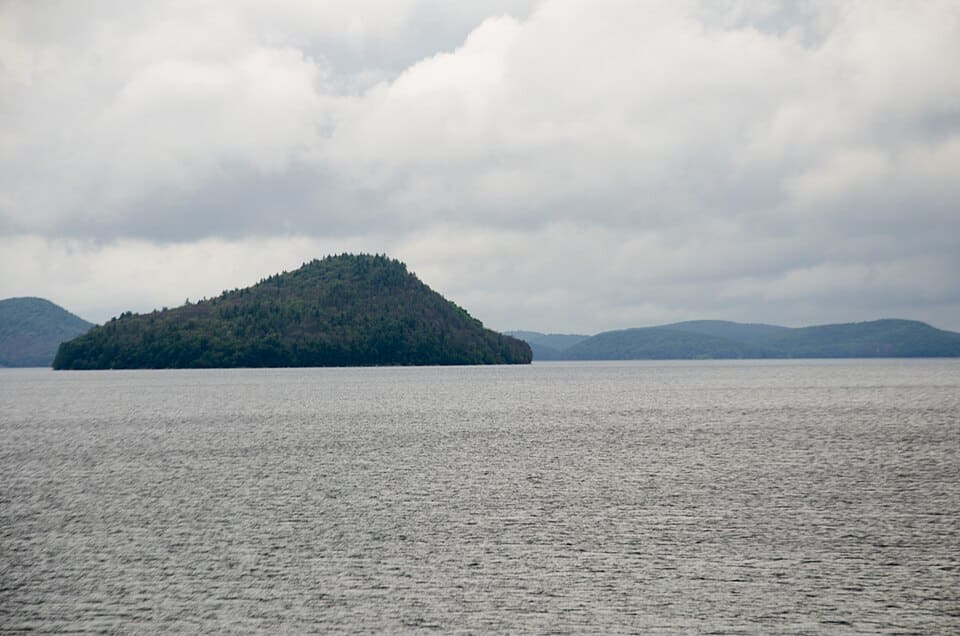
They’re getting financially starved in the process.
For nearly a century, residents in the towns around the Quabbin Reservoir have faithfully upheld one of our Commonwealth’s most profound collective commitments: safeguarding clean, reliable water for Eastern Massachusetts. Although residents of those towns are, ironically, not given access to the water they protect and provide to some 2.7 million fellow Massachusetts residents, they have done this responsibly and at tremendous cost. Now, that cost has become unsustainable.
Take the town of Shutesbury, a Massachusetts community of 1,800 people on the western shore of Quabbin. One of every three acres in the town is held by the Commonwealth to protect the reservoir. That land is permanently blocked from development, permanently removed from the town’s tax base—and permanently vital to the survival of Boston and the other Eastern Massachusetts communities the reservoir serves. Yet the financial arrangement that compensates Shutesbury for this sacrifice treats the land as almost worthless, and costs Shutesbury residents over $3 million every year.
Shutesbury’s fiscal year 2026 town budget was $7.8 million. Like many towns, it depends on ever-increasing residential property taxes to pay that cost. Unlike many towns, it cannot slow those tax increases through development.
Shutesbury lacks a commercial or industrial tax base and the capacity to build substantial amounts of new housing because it has no public water supply (even with Quabbin literally in the town) and because most land suitable for such development is within the one-third of town taken by the Commonwealth for the reservoir. The result for all the Quabbin towns is a budget crisis that has become an existential threat, with schools facing closure, roads and bridges left unrepaired, and fire, police, and safety departments understaffed.
In towns where the Commonwealth takes land off local tax rolls, it provides payments in lieu of taxes – or PILOTs. In FY26, Shutesbury received a PILOT of $299,392 for the 4,979 acres of the town held by the Commonwealth. That’s 4 percent of the town’s FY26 budget revenue in exchange for 30 percent of its land and comes to just $60.13 per acre.
Statewide, by contrast, the average PILOT is about $130 per acre.
Every Quabbin town suffers this disparity. Pelham, for example, gives up 35 percent of its land for the reservoir and gets $56.59 per acre. Hardwick gives up 20 percent and gets $26.24 per acre. New Salem gives up 91 percent for just $21.21 per acre.
Shutesbury’s Quabbin land has the potential to generate tax revenue of $510 per acre. That means its PILOT of $60.13 per acre is just 11.8 percent of the land’s actual tax value. In FY26 alone, then, Shutesbury was forced to forgo revenue of up to $3.1 million because of Quabbin. In FY26, the 12 Quabbin watershed towns altogether gave up a total of $54.5 million in potential tax revenue because of Quabbin and received PILOTs of just $3.2 million, or 6 percent of that land’s tax value—a loss of $51.3 million.
And while the actual tax value of this land has increased exponentially over the past five years, the amount of the Quabbin PILOTs has not. Between FY21 and FY26, the total budget for the Massachusetts Water Resources Authority has increased $128.3 million (16.2 percent) while the amount set aside from that budget for PILOTs to the 12 Quabbin towns has increased just $111,597 (3.6 percent). The portion of the MWRA budget set aside for Quabbin PILOTs has in fact gone down over those five years, from 0.39 percent in FY21 to 0.35 percent in FY26.
The state’s PILOT system treats Quabbin land as nearly worthless. In reality, Quabbin land is the most valuable land in Massachusetts, because without it, more than 2.7 million people in 53 communities throughout Eastern Massachusetts — 40 percent of the state’s population — would have no water.
If Shutesbury’s Quabbin land were developed to the same density as the rest of town, it would generate enough tax revenue to pay 37 percent of the town budget. Assuming a proportional increase in service costs if the Quabbin land were developed to the same density as the rest of the town currently, that means every Shutesbury homeowner pays roughly 32 percent more in property taxes because of the reservoir.
The average Shutesbury homeowner paid approximately $2,100 more in property taxes last year than they would have if the Quabbin did not exist. For comparison, the average single-family Boston water bill in FY26 was $1,300. Like all the Quabbin towns, Shutesbury is, through those higher property taxes, subsidizing the true cost of the water used by its eastern neighbors.
Like their neighbors to the east, Quabbin watershed residents pay a price for Quabbin water; unlike their neighbors to the east, Quabbin watershed residents do not get to drink that water—even as household and public wells go dry or are contaminated by PFAS, as fire departments run out of water to fight fires, as school playgrounds and athletic fields are closed for the year due to a lack of irrigation water, and as water bans are put into place across the region. The engine and lifeblood of Eastern Massachusetts’s economic life, and actual life, is Quabbin water, but that water flows east at the literal expense of those who provide and protect it.
When the Quabbin host communities, their legislators, citizens, and supporters talk about Quabbin equity, they are talking about the state’s obligation to make those communities whole. They are talking about the moral imperative the Commonwealth has to bring Quabbin towns’ finances in line with comparable communities across the state by offsetting a fair portion of the cost burden imposed on them by the presence of the reservoir.
This would mean helping them achieve solvency, stability, and the ability to maintain schools, roads, emergency services, and other basic services—including the very conservation, emergency, and land use regulation services that keep Quabbin safe, guarding the groundwater, aquifer, and ecological context that supplies Eastern Massachusetts with clean water every single day.
Nobody expects the state to compensate the Quabbin communities for 100 percent of the tax value of the land the Commonwealth has taken from those towns—there is a public-good value in that land’s use for water supply, carbon sequestration, conservation, and recreation. But, based on the tremendous revenues the Quabbin generates annually and the essential role Quabbin water plays in the life of Eastern Massachusetts, it is clear that 6 percent of the land’s tax value is far too low a payment.
In the 1930s, when the Swift River Valley was flooded to make Quabbin, the people of Enfield, Greenwich, Prescott, Dana, and other smaller villages surrendered homes, farms, businesses, and communities for the good of the Commonwealth. Those towns no longer exist, but 88 years later, the towns surrounding Quabbin continue to sacrifice for the reservoir and everyone it serves. It is time for the Commonwealth to recognize and remedy that sacrifice.
The Massachusetts residents of the Quabbin communities are not asking for charity. They are asking for equity. Because while Boston drinks their water, they drown in the ever-increasing tax burden that stems directly from an inequitable PILOT system.
In 1927, The New York Times reported on the plan to dismantle the four Quabbin towns, observing, “Greater Boston by no means is indifferent to the tragedy which the need of the city inflicts upon these innocent bystanders.”
Those who live in the remaining Quabbin towns hope that their neighbors in Greater Boston, including the Massachusetts Water Resources Authority, Gov. Healey, and the state legislators from the 53 communities who depend on Quabbin water, remain “by no means indifferent” to their continuing suffering.
Matteo Pangallo is the land use clerk for the Town of Shutesbury and chair of the town’s Community Preservation Committee.
This article first appeared on CommonWealth Beacon and is republished here under a Creative Commons Attribution-NoDerivatives 4.0 International License.
Comments (3)
Comments are closed.




Timothy: it’s based on the amount of tax revenue per acre generated by the non-Quabbin land in the town. Data for all the Quabbin towns is at https://drive.google.com/file/d/1OLajQ4jcCxn8glr_um29DpPyRSY1gtCe/view?usp=sharing
There is enough capacity from the reservoir to provide at least half of the surrounding towns with water, without exhausting the supply. The state should add them, creating jobs, decreasing the support from surrounding towns at a loss to them.
And increase the remaining half of towns still not obtaining Quabins water with the Pilot funds that would have been spent on the towns now added.
As someone who is interested in higher land value taxation and lowering taxes on structures this article was interesting. I had a question about this specifically:
“Shutesbury’s Quabbin land has the potential to generate tax revenue of $510 per acre.”
How is this determined?