
Preserving Waltham’s past at the Malone Archives
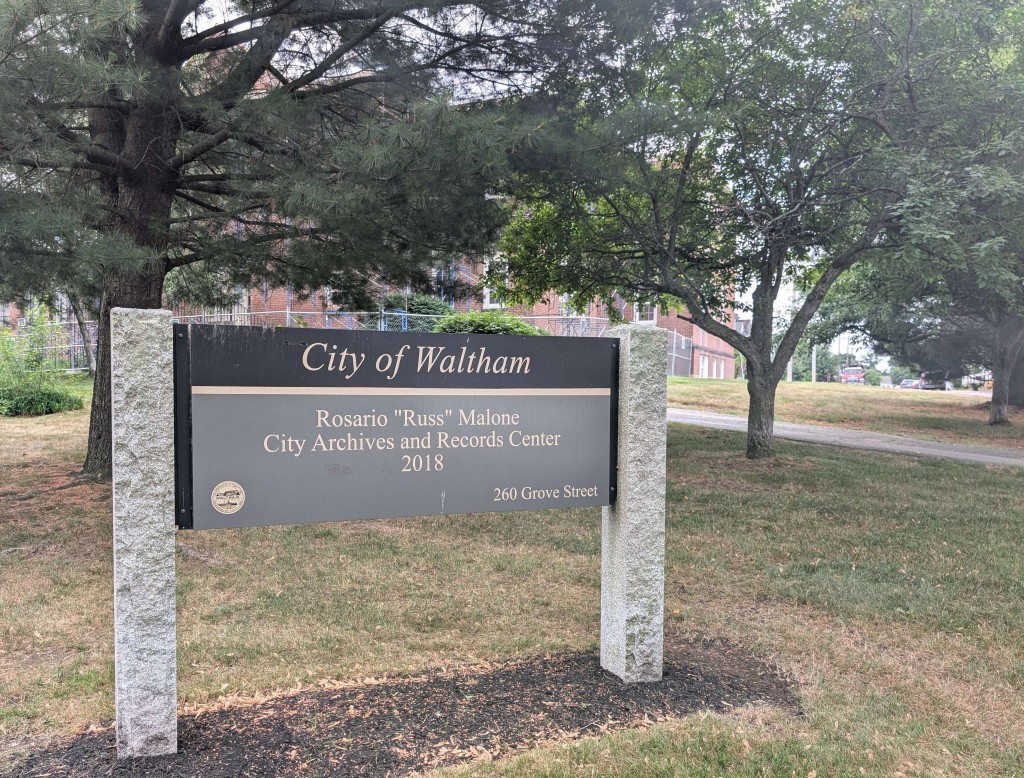
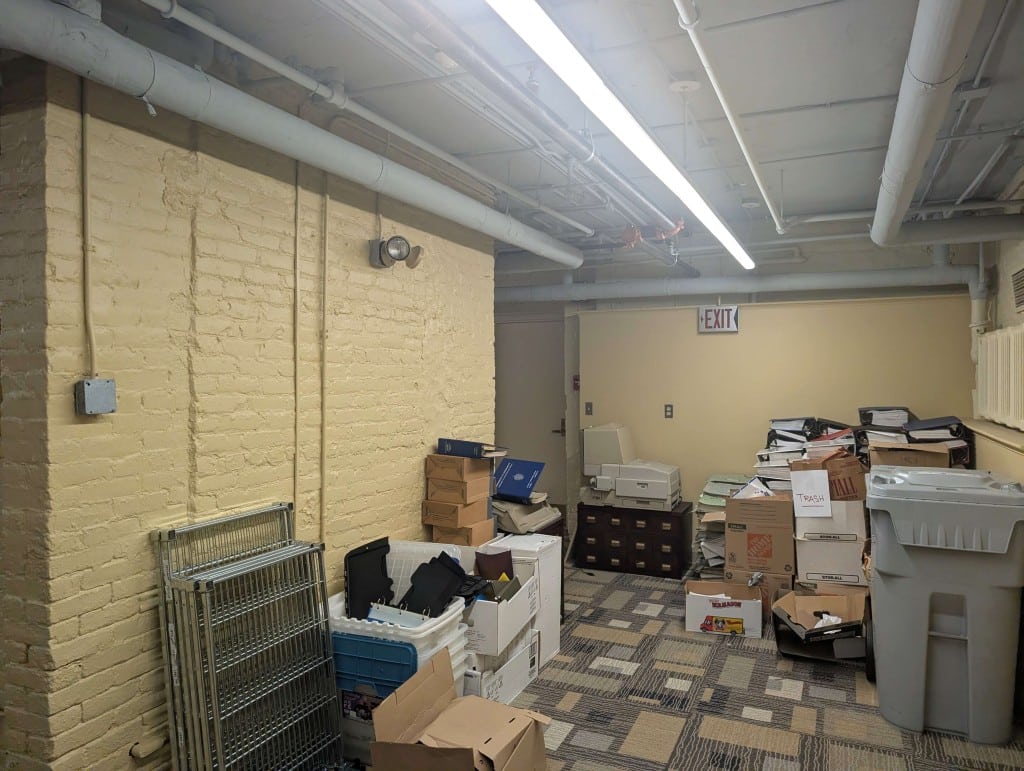
Former students of the Bright Elementary School may find the building difficult to recognize. The gym and some second-floor classrooms have been repurposed for elections. The library, now mostly empty, serves as a half-forgotten storage room.
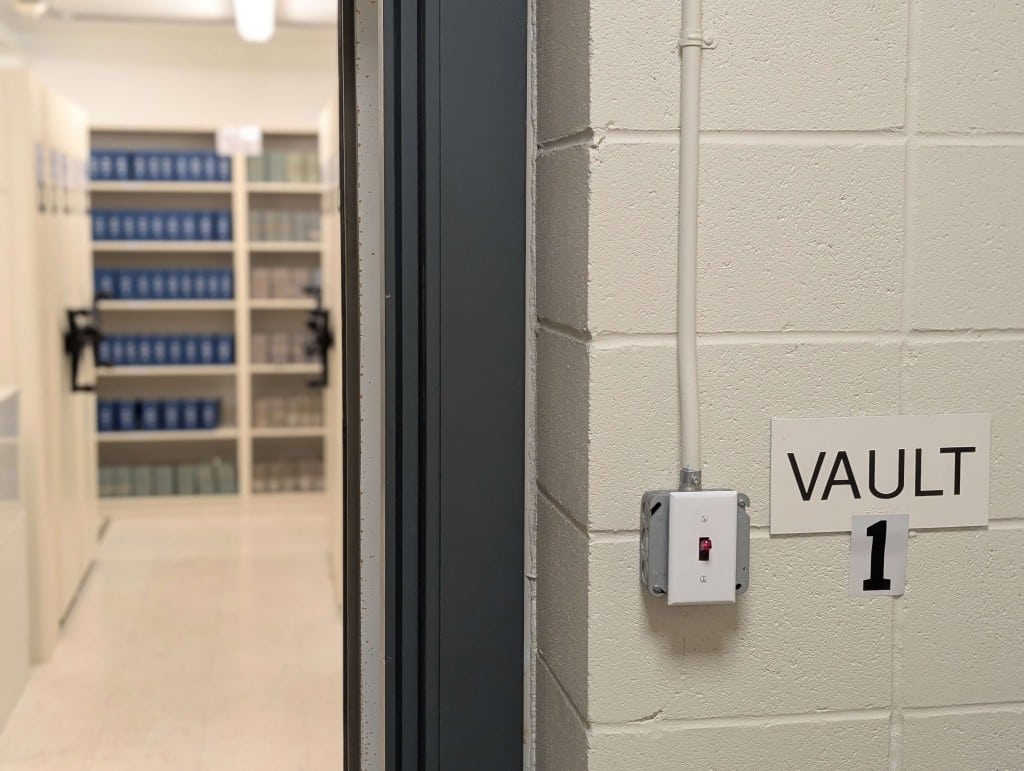
Perhaps most notable, however, are the two climate-controlled vaults in the building’s basement: part of a decade-and-a-half-long project to turn the Bright School into a long-term repository for the city’s archives.
The City Council voted to turn the former school over to the Clerk’s Office in 2009 to use as a records center. City Clerk Joseph Vizard said that the building is unique: “Very few cities and towns have a facility like this.”
The city is required to keep most government records for multiple years by state law, and must keep others indefinitely. Vizard said the Clerk’s Office at City Hall used to contain “cabinets and cabinets and cabinets” of records. Although some city departments still have their own vaults in City Hall, many records, including some of Waltham’s oldest documents, now live in the former Bright School, now called the Rosario “Russ” Malone Archives and Records Center.
Former clerk Russ Malone — after whom the center was named in 2019 — and retired custodian Bob Peterson, both played significant roles in the early days of the archives transfer, organizing documents and moving them to their new location on Grove Street.
Waltham has used approximately $2.13 million in Community Preservation Act funding to create, renovate and modernize the archives building. It used CPA funds to install the vaults in 2012, implemented a fire suppression system around the same time, and paid for a roof replacement last year.
Today, the collection is split into multiple levels of storage. Aboveground, across from the building’s elections headquarters, there are filing rooms full of recent city records; below, in the basement, sit the vaults containing older documents dating back to the Town of Waltham’s founding in 1738.
Vizard said the archives are unlikely to expand much further. Although the former school still has rooms sitting empty, they would require significant work to become archives-ready because of moisture issues. The vaults themselves, he says, are already “finicky,” and require significant HVAC maintenance.
These days, Vizard said members of his office work on archival projects with interns during the summer and during other slower periods of City Council work. Executive Assistant to the City Clerk Cathy Magliarditi spearheaded a project to commission a custom digital filing system for easy access, and the office has used AI tools to digitize all the ordinances of Waltham’s City Council — and its previous Board of Aldermen — since their inception. In 2022, the office also brought in the Northeast Document Conservation Center to identify any outstanding long-term needs for the building and its contents.
At this point, the Clerk’s Office is focused on restoring older documents. Vizard said they have enough materials to “keep [us] busy” for ten years.
Waltham life, three centuries ago
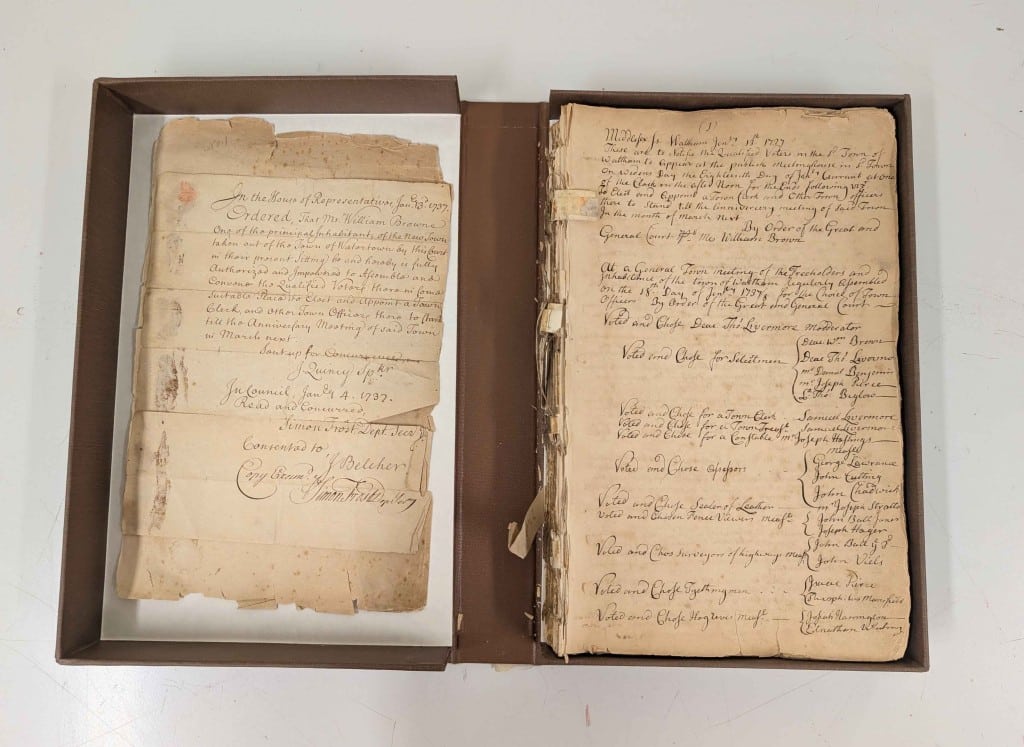
Most recently, his office acquired $6,895 in CPA funds to restore Waltham’s First Book of Town Records, a project they hope to finish with the NEDCC by winter. At a June City Council meeting, Vizard regaled councilors with stories from the 18th-century ledger about family histories, early construction projects, town banishments and quartering French troops in the lead-up to the American Revolution.
At the moment, residents working on local history projects can write to the Clerk’s Office to ask to visit the records. Vizard admits that few residents have asked to peruse Waltham’s archival documents, which mostly document the standard ins and outs of Waltham life — city ordinances, meetings, births, deaths, contracts, tax records and the like.
In recent memory, he said, only one person has asked to use the archives for a local history project: retired librarian Marjanneke Wright, when she was documenting the lives of Black Waltham residents enslaved by local landowners.
Vizard said the building’s location — directly across from the Grove Hill Cemetery, where many figures mentioned in the archives lie to this day — reminds him of ties these documents have to the community. He said he’s still hoping to “strike gold” by finding some new and interesting piece of Revolutionary War history. In the meantime, his office will continue to work through restoring Waltham’s oldest records over the next decade — hopefully, preserving them for centuries to come.
Author

Comments (1)
Leave a comment
When commenting, please keep in mind we are a small non-profit focused on serving our community. Our commenting policy is simple:
- Common sense civility: we’re all neighbors, but we can disagree.
- Full name required: no anonymous comments.
- Assume the best of your neighbors.




Why isn’t the roof done after a year